

01
The conversation is unrepeatable
Two adjusters ask the same claimant different questions and get different files. Neither is wrong, and neither can be compared with the other.
Your rules. Run at scale. Every time.
Prudara conducts the interviews your regulations require and returns a structured record, traceable to the conversation and the evidence behind it. You define the workflow. Prudara runs it.
The problem
Every claim, application and disclosure starts as an unpredictable human conversation. It has to end as something defensible: consistent, evidenced, and reviewable months later by somebody who was not there. Today that gap is closed by people re-asking the same questions, and by files nobody can reconcile once accounts disagree.
01
Two adjusters ask the same claimant different questions and get different files. Neither is wrong, and neither can be compared with the other.
02
Notes are written from memory once the call has ended. What was actually said stops being distinguishable from what was inferred.
03
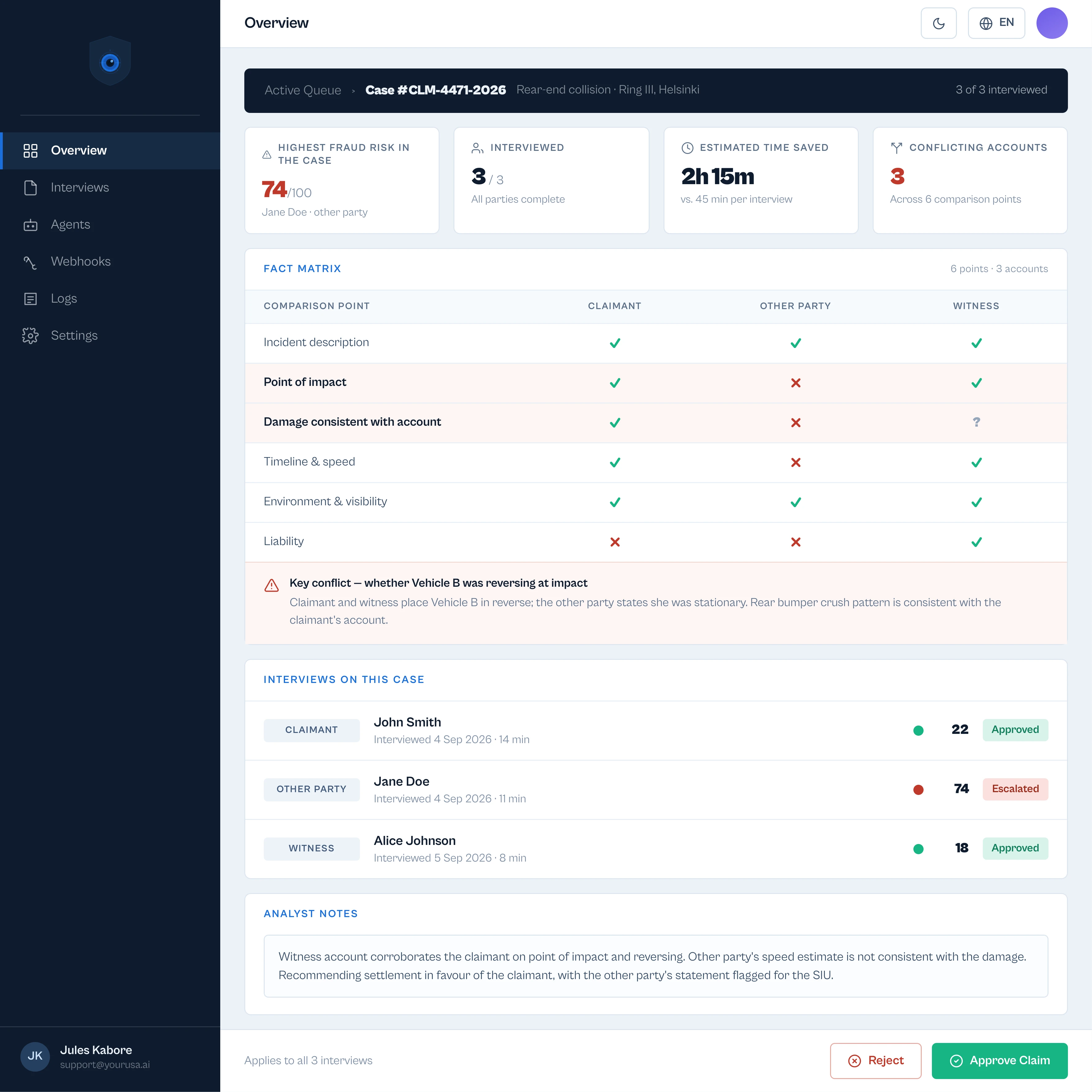
The claimant is interviewed. The other party and the witnesses usually are not, so contradictions surface at litigation rather than at intake.
$308.6B
Estimated annual cost of insurance fraud in the United States, across all lines.
Coalition Against Insurance Fraud, “The Impact of Insurance Fraud on the U.S. Economy” (2022)
$400–700
Added to the average American family's annual premiums by non-health insurance fraud.
Federal Bureau of Investigation, Insurance Fraud
10.5B hours
Time the American public spends each year responding to federal information collections.
Office of Information and Regulatory Affairs, Information Collection Budget
4.6M
Suspicious activity reports filed by U.S. financial institutions in a single year.
FinCEN, SAR Statistics
The record
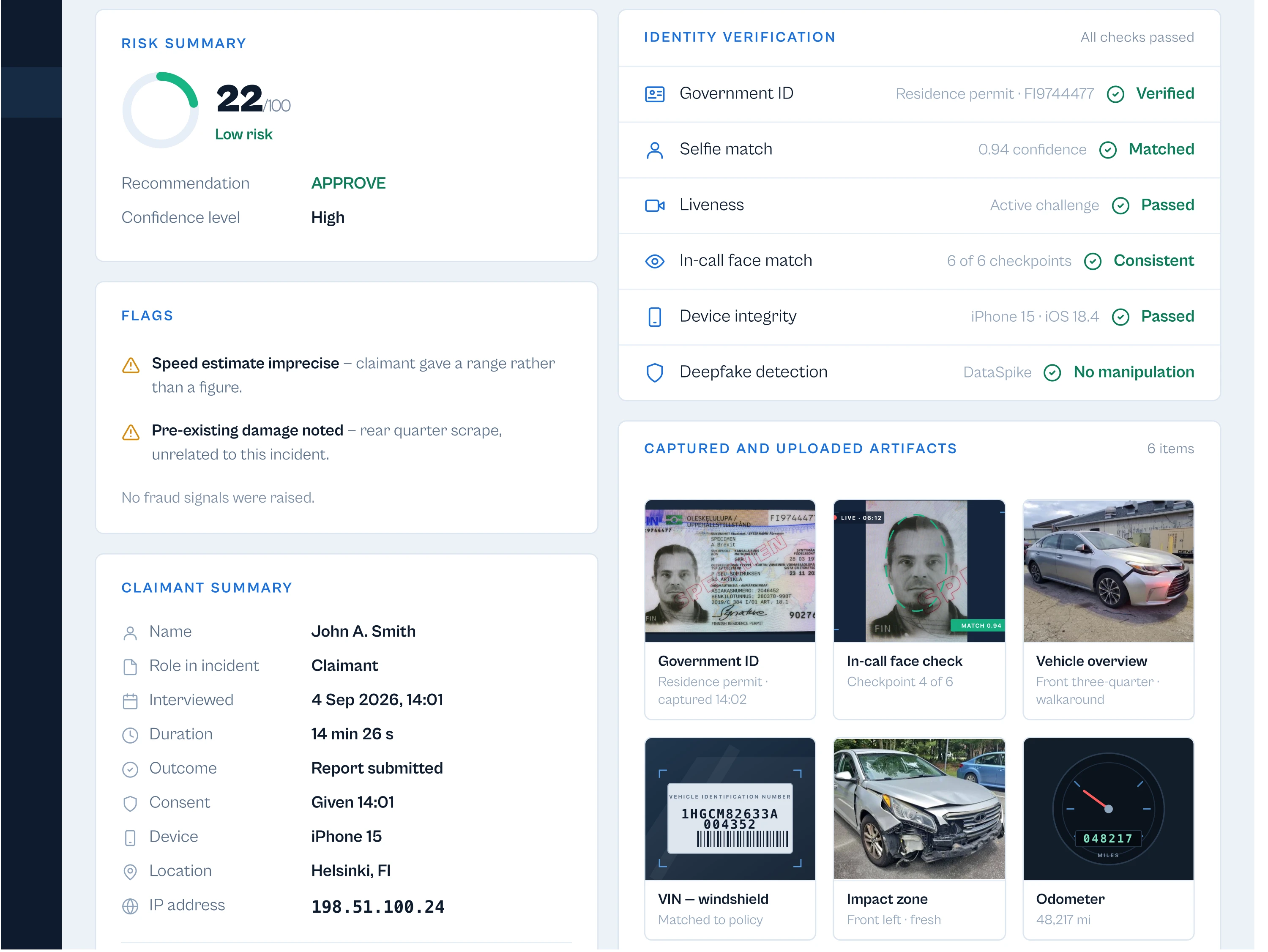
Interviews are grouped by case. The disagreement comes first, because resolving it is the job. Underneath, each account carries its own identity verification, evidence and outcome.
Interview record: identity, evidence and transcript
What is hard about this
The difficulty is not the conversation. It is producing something reliable, auditable and operationally scalable out of something inherently unpredictable, then showing eighteen months later exactly where a figure came from.
The same workflow produces the same shape of record from every interview, however the conversation went.
Every field carries its provenance: the utterance, the timestamp, the captured evidence, and the identity checks that were passing at the time.
Claimant, other party and witnesses are interviewed in parallel, in their own time and their own language, without adding headcount.
Who this is for
First notice of loss through to a structured claim file: identity, the account, the vehicle or property, the evidence, and every other party and witness on the same incident.
Onboarding interviews, source-of-funds enquiries and periodic reviews, recorded to the standard an examiner expects.
Enhanced due diligence at the moments a static form cannot settle, without putting a queue in front of a new customer.
Consistent client and witness intake, captured once and comparable across a matter.
Attested declarations and eligibility interviews, plus visa and citizenship interviews conducted at population scale in the applicant's own language.
Common questions
Every answer is written into a field your workflow named, and your rules bound what the model is allowed to decide. Anything outside those bounds is refused rather than guessed, marked, and left for a person. A refusal appears in the record as a refusal, so a gap never reads as a finding.
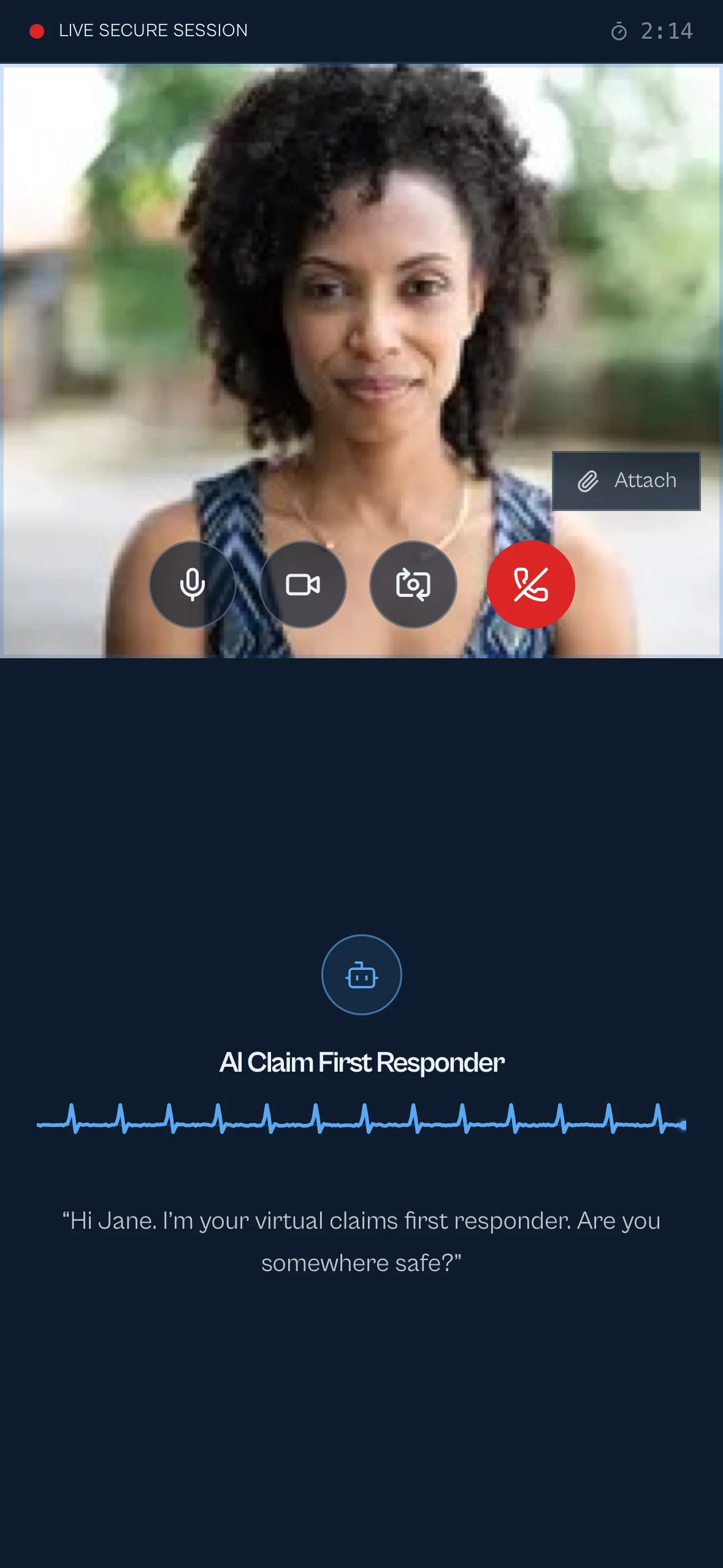
Identity is settled before the substantive questions begin. The interviewee presents an identity document, passes a liveness check, and is matched against the portrait on that document. The face check then continues for the length of the call, so the person answering at the end is the person verified at the start. Each check is recorded against that interview.
Evidence captured in an interview is written to storage belonging to your organisation. Prudara is the processor and your organisation is the controller, so what is collected, how long it is kept and who may see it are your decisions. Interview data is not used to train general-purpose models, and you can specify the region it is processed in.
Prudara interviews the claimant, the other party and the witnesses in their own language, which is how three accounts of one incident can be taken in parallel without booking an interpreter. The available set follows the speech and language models in use rather than a fixed list we maintain, so ask about a specific language before you rely on it.
The record is not a summary written afterwards. Every value traces to the moment it was said, with the timestamp, the recording, the evidence captured alongside it, and the identity checks that were passing at the time. That is what a disputed figure is checked against. Whether it is admissible is a question for your jurisdiction and your counsel, not for us.
The output is structured data, not a document to be re-keyed. Each answer sits in the field your workflow named, so those names can be mapped to the fields your own system already uses. Captured documents and photographs are written to your storage. The handover is agreed when the workflow is configured, before any interview runs.
Bring a procedure you already use. We will configure it and run a live interview against it on the call.
Or email us at hello@prudara.ai


